
Buying a forklift: what lenders look at first
The four things lenders check when you finance a forklift: your business, your credit history, the forklift itself and the deal. Plus what to send to keep it simple.
 Jane BrookerFinance broker · Updated 6 October 2026 · 3 min read
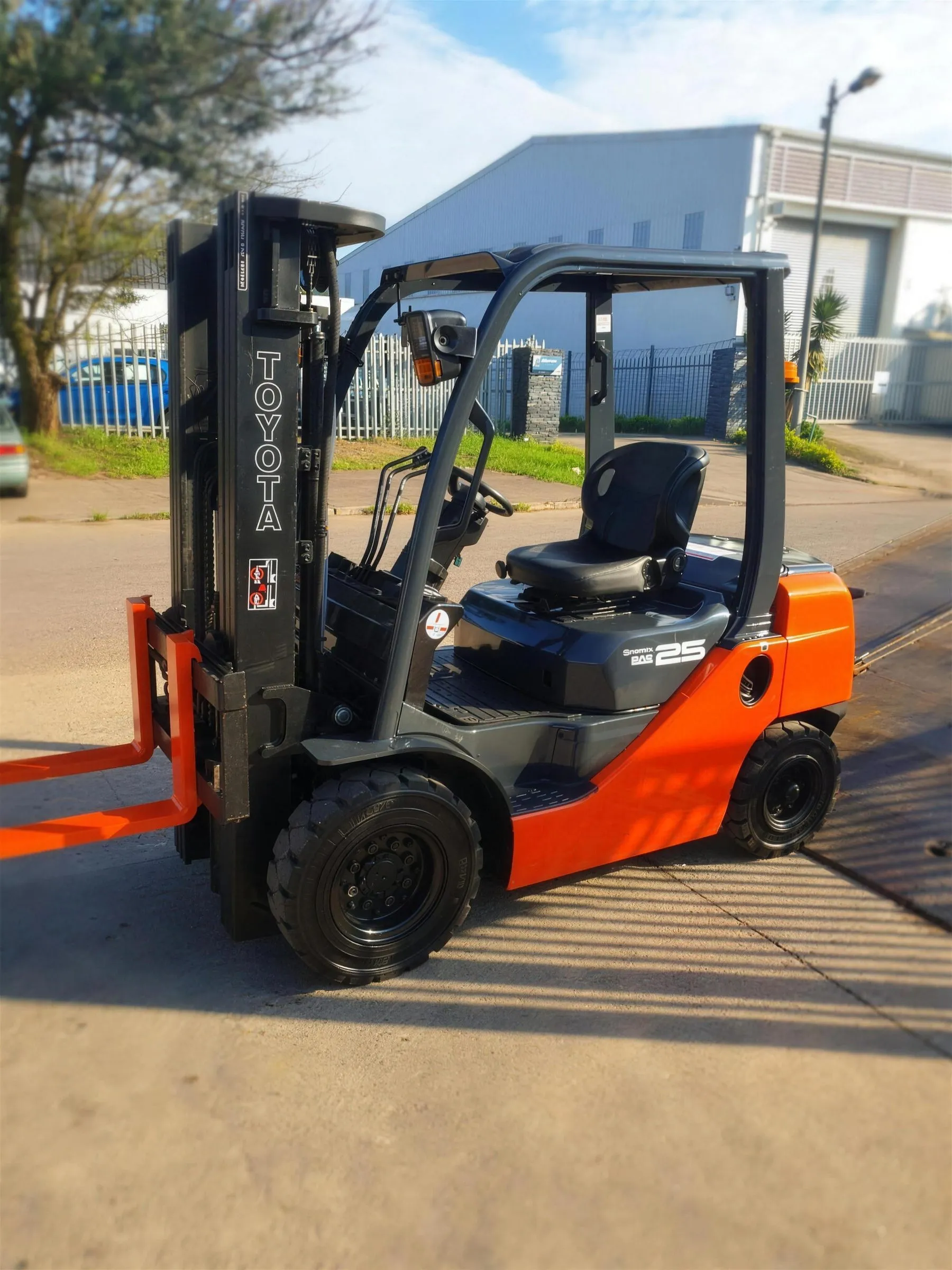
Lenders look at four things: your business, your credit history, the forklift itself and the deal. A clear supplier quote with the make, model, year, hours and serial number makes it quicker and simpler.
Forklift deals are some of my favourites. The buyer usually knows exactly what they need, the supplier has a clear quote, and the forklift goes straight to work.
Here is what lenders look at, in the order they usually look at it.
1. Your business
Lenders want to understand who they’re lending to.
- How long you’ve been trading. Lenders look at how long your ABN has been active. Each lender has its own minimum.
- GST registration. Whether your business is registered for GST, and since when.
- Your industry. Warehousing, transport, building supplies, manufacturing, landscaping or retail. Some lenders know certain industries better than others.
- How the business is set up. Sole trader, partnership, company or trust. Companies and trusts usually have more paperwork, and directors are often asked to back the loan personally.
2. Your credit history
Lenders check your credit history, and your business’s history if it has one. They want to see that past debts were paid on time. If you have had a problem in the past, such as a missed payment or a tax debt, tell me at the start. It’s much easier to find the right lender when I know the full picture.
3. The forklift
- New or used. Both can be financed. For used forklifts, lenders look at the age, the hours and the condition. Some set an age limit, and some ask for a formal valuation on a private sale.
- Make and model. Well-known brands with a strong second-hand market are the simplest.
- Who is selling it. A dealer is usually simplest. Private sales and auctions can be financed too, but they need extra checks.
- Attachments. Side shifts, fork positioners, clamps and other attachments can often be included if they are on the invoice.
4. The deal
- The price, including GST.
- Any deposit or trade-in.
- The term. How many years you want to repay it over.
- A balloon payment, if you want one. This is a lump sum at the end that lowers your regular repayments. Read balloon payments explained.
You can test different terms and balloons in my repayment calculator.
Before you buy: practical checks
Finance is only part of it. A few things to check before you commit:
- Licences. In Queensland, most forklifts need an LF high risk work licence to operate. Order-picking forklifts need an LO licence. Your business must see written proof of the licence before someone drives it, and licences are renewed every 5 years.
- Capacity. The data plate shows the serial number and rated capacity. Real capacity changes with the load centre, the lift height and any attachments, so check it against your heaviest loads.
- Fuel type. Electric, LPG or diesel. Think about where it works (inside or outside) and how you’ll charge or refuel it. In Queensland, an LPG forklift’s gas system must be inspected and certified at least once a year.
- For used forklifts: the hours, service history, forks, mast, chains and hydraulics, tyres and brakes, and the battery’s age for electric models. Don’t judge on the hour meter alone.
- PPSR search. For a used forklift, search the PPSR for money owing before you pay.
- Roads. If it will ever drive on a road, including car parks and footpaths, it needs conditional registration. It doesn’t if it stays on private property.
What to send me
- The supplier’s quote or tax invoice, with the make, model, year, hours (if used), serial number and price
- Your ABN and business details
- Your recent BAS or financial statements, if the lender asks (I’ll tell you)
- Your driver licence
That’s usually enough to get started. Many approvals within 24–48 hours, depending on the lender and your situation.
